The Backstory
As of April 26, 2026, the public trail around “burger method Las Vigas” feels less like a single old-school recipe written on one stained card and more like a local style hiding in plain sight. Current listings for Las Vigas show an active burger scene, and one of the clearest clues is smoke and tocino-piña: local burger listings include Delicias al Carbón, and the shop’s public page promotes bacon-and-pineapple burgers. What makes that even more interesting to me is that the municipality’s own gastronomy page still frames Las Vigas through older, more traditional dishes like tamales, mole, and chiles rellenos. That contrast is exactly the kind of thing I love in food. It tells me the burger here is not replacing the town’s cooking soul; it is joining it, picking up a little charcoal, a little sweetness, and a little swagger from the street.
Las Vigas de Ramírez sits high in the mountains of Veracruz, at roughly 2,420 meters, and nearby protected mountain land on the slopes of Cofre de Perote is described by Veracruz state sources as conifer and oak country, rich in upland vegetation and fungi. The municipal development plan also points to crops such as potato, maize, and oats among the area’s important products. When I picture this place, I do not picture a flat, sun-blasted roadside burger. I picture cold air slipping under the door, a jacket hanging over the chair, and a skillet hot enough to answer the weather with a hiss. I picture pine in the distance, earth under the fingernails, and the kind of appetite that asks for something juicy, toasted, and just a little excessive in the best possible way.
That mountain-town mood collides beautifully with the burger’s bigger history. Britannica notes that the burger patty and sandwich were probably brought by 19th-century German immigrants, while Smithsonian points out that many competing burger-origin stories cluster between 1885 and 1904, right when mechanical meat grinders became common and the idea of a handheld chopped-meat sandwich suddenly made all kinds of practical sense at fairs and crowded public places. I adore that history because it reminds me that burgers have always been travelers. They move. They borrow. They settle into new places and start speaking the dialect of the local kitchen. So a Las Vigas-inspired burger does not need to pretend it was born in a colonial cookbook. It only needs to taste like it belongs near mountain fog, warm griddles, and a town that still loves tamales but clearly has room in its heart for a messy burger night.
I remember the first time I tried to build a burger around that feeling instead of around a trend. My secret was not trying to make it fancy. It was trying to make it feel inevitable. Smoke from the pan. Sweetness from blistered pineapple. Salt from crisp bacon. A soft bun that gets just enough toast to stand up straight. A little chipotle heat to pull everything together. The pineapple is not a gimmick to me, because public Las Vigas burger pages really do point to that sweet-savory tocino-piña lane, and once bacon starts crackling beside a charring ring of fruit, the whole kitchen smells like someone made the smartest possible decision with dinner. That is the version I want to cook again and again: a burger with one foot in classic burger science and the other in the cool, hungry mood of Las Vigas.
Why This Recipe Works
This burger starts with the part that matters most: the meat. I use ground beef around 80/20 because beef patty research consistently shows that higher-fat patties score better for juiciness, tenderness, and beef flavor than very lean ones, and serious burger testing lands in the same place. The other half of the trick is texture. I do not knead or overwork the beef. I barely gather it. A burger should feel loose and relaxed before it ever meets heat, because the moment you compact it too much, you start trading tenderness for chew.
The next rule is one I guard fiercely: salt the outside right before cooking, not the meat in the bowl. Serious Eats’ burger testing found that early salting changes the protein structure and pushes a burger toward a tighter, springier, sausage-like texture. Surface salting at the last minute keeps the bite tender while still giving you the seasoning you need. Then comes the hard sear. A smash in the first moments of cooking increases surface contact, which means more browning and more Maillard flavor. That is the deep, savory, almost irreplaceable burger taste people chase when they say they want a burger that tastes like it came from a real griddle.
The bun matters more than people admit. Serious Eats describes the ideal burger bun as soft, a little sweet, and strong enough to handle the juices without falling apart, and that is exactly why I toast mine. That light toast gives the bread backbone and keeps the bottom from going limp halfway through dinner. Then I layer in the Las Vigas clue: bacon and pineapple. I am borrowing that directly from current local burger signals, because sweetness against smoke and salty fat is not random at all. It is balance. It is relief from richness. It is the reason the second bite tastes as exciting as the first.
Ingredients
This makes 4 generous burgers.
- 1 pound ground beef, preferably 80/20 — my sweet spot for juicy, flavorful patties.
- 4 brioche or potato buns — preferably soft and pillowy, but sturdy enough to hold juices once toasted.
- Kosher salt — for seasoning the outside of the patties right before cooking.
- Freshly cracked black pepper — a little bite without overpowering the beef.
- 4 slices melting cheese — American for silkiness, cheddar for sharpness, or Oaxaca-style cheese for a stretchy, generous melt.
- 4 slices thick-cut bacon — cooked until deeply crisp.
- 4 pineapple rings — fresh or canned, but patted dry so they caramelize instead of steam; this is my nod to the tocino-piña burgers showing up in Las Vigas.
- 1 small white onion — sliced very thin so it softens quickly.
- Pickles — for the bright, vinegary snap that keeps the burger from feeling heavy.
- 4 tablespoons mayonnaise — the creamy base of the sauce.
- 1 to 2 tablespoons chipotle in adobo, finely chopped — for smoke and warmth.
- 1 teaspoon yellow mustard — for a sharp little lift.
- 1 tablespoon butter or a spoonful of bacon fat — for toasting the buns.
- Optional lettuce or jalapeños — if you want extra crunch or heat.
The Method
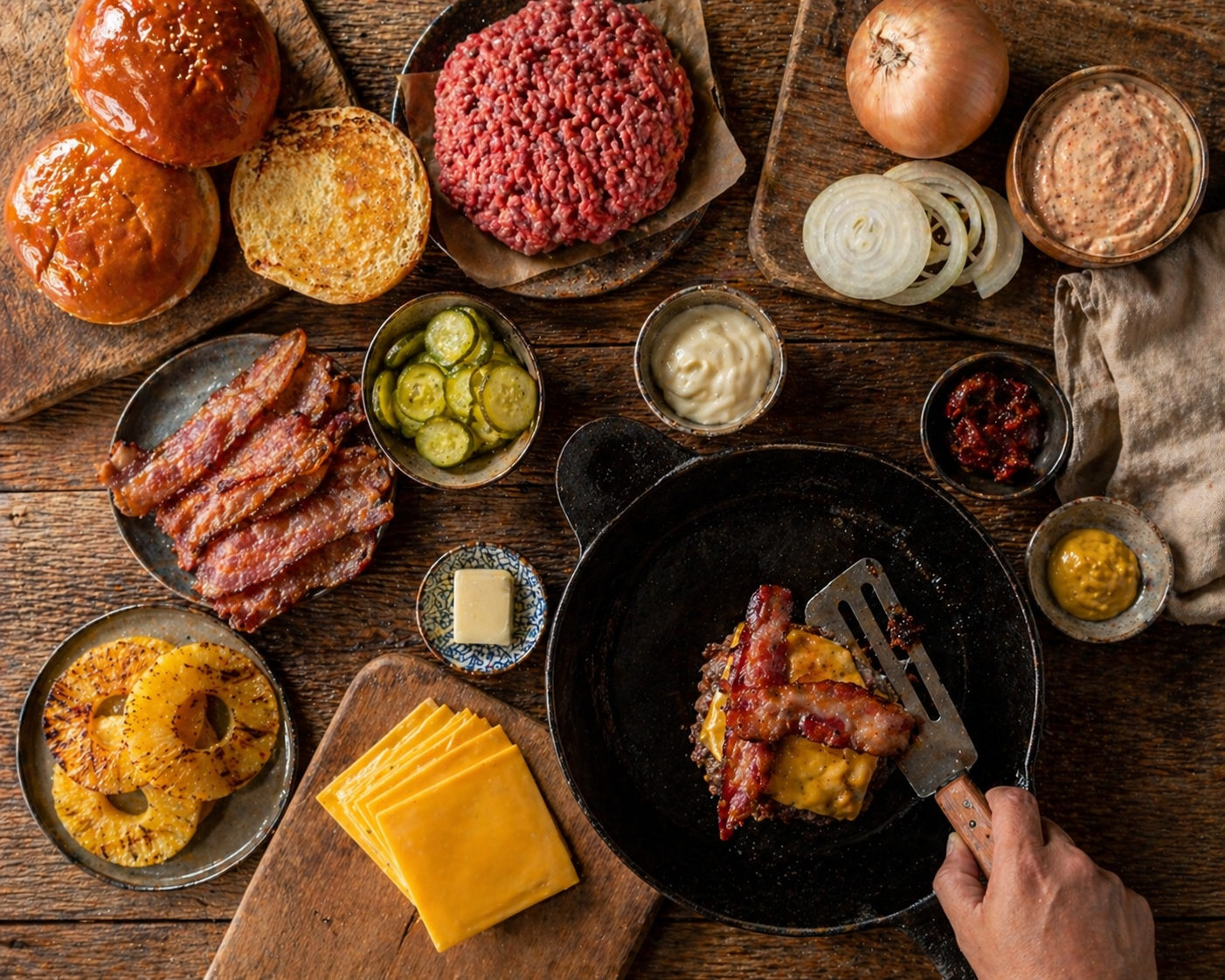
I start with the bacon because it sets the tone for everything else. Lay it in a cold skillet, bring the heat up slowly, and let it render until crisp. Set it aside, but do not waste the fat. That is liquid flavor, and I like a little of it for the buns or the pineapple. Pat the pineapple dry and sear it in a hot pan or on a grill until it picks up dark edges and smells almost floral and smoky. Stir the mayonnaise with the chipotle and mustard, then set that aside too. Now turn to the beef. Keep it cold. Divide it into four loose portions and gently shape them into balls or rough patties. Do not squeeze, knead, or compact them, and do not salt them yet. Watch out for overhandling here; that is one of the fastest ways to turn a beautiful burger into something dense and tight.
Toast the buns cut-side down in a little butter or bacon fat until lightly golden. I do this before the meat so the assembly later feels calm instead of frantic. Then heat a cast-iron skillet or griddle until it is seriously hot. When the beef hits the surface, I want a hard, confident sizzle. Put the beef down and, if you are going for a thin burger, smash each portion once in the first 30 seconds and then leave it alone. Season the top surface generously with salt and pepper. Let the edges go dark and lacy before you even think about flipping. Watch out for a pan that is only warm instead of hot; warm pans steam burgers, and steamed burgers never give you that deep brown crust you came here for.
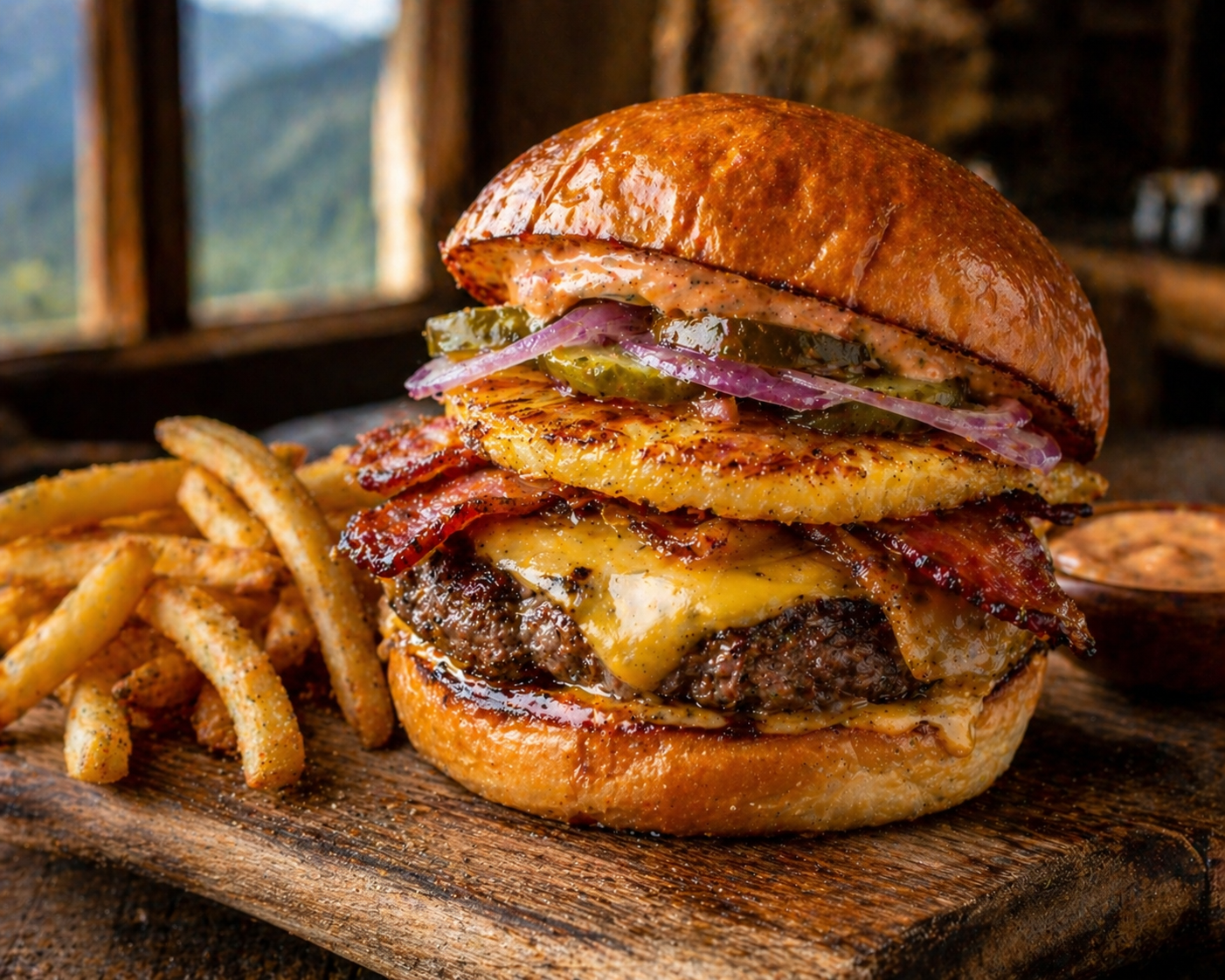
Once the bottom crust is beautiful, scrape hard underneath and flip. Add the cheese right away. If you want the onions softened, give them a quick turn in the hot pan while the second side cooks. For a thicker burger, skip the smash and give it a little more time, but keep the same principles: hot surface, minimal fuss, late salt. If you want the safest home benchmark, USDA recommends cooking ground beef to 160°F. Build each burger with chipotle sauce, pickles, onion, the cheesy patty, bacon, and the grilled pineapple. I like pineapple above the cheese, where its juices mingle with the fat without soaking straight into the bun. Watch out for over-saucing both bun halves; this burger already has plenty of richness, and restraint is what keeps it from tipping over into chaos.
The Flavor Profile
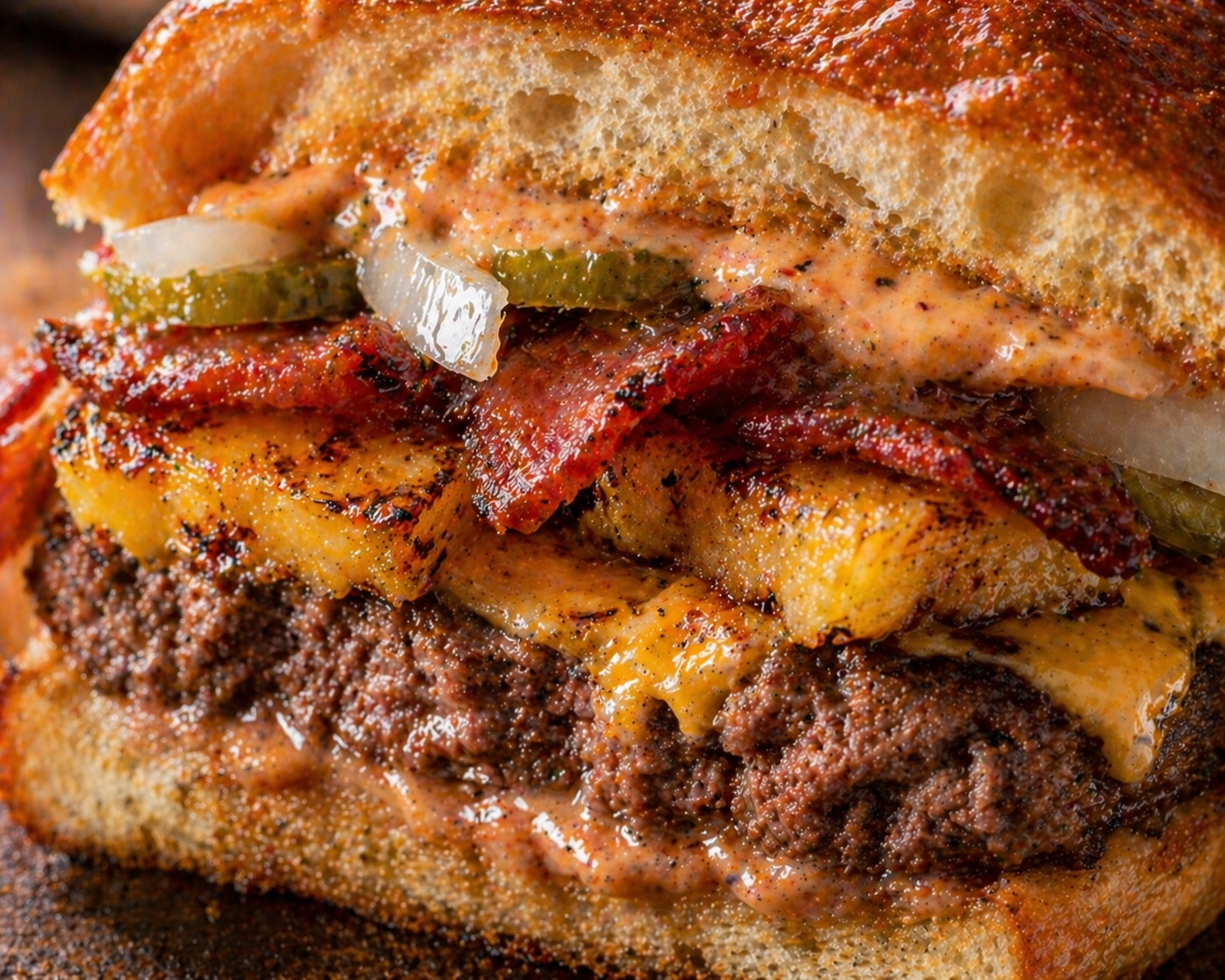
Done right, this burger lands in layers. The first thing I notice is the crust on the beef: savory, dark, and almost crackly at the edges. Then the cheese softens that intensity and turns the middle lush. The bacon brings a salty snap, while the pineapple comes in with smoky sweetness and just enough acidity to keep the whole thing awake. The onions add softness, the pickles flash bright and sharp, and the chipotle mayo trails behind with a gentle heat that feels warm rather than loud.
What I love most is that it never eats like a novelty burger. It still tastes unmistakably like a burger first. The Las Vigas accent comes in as a rhythm: smoke, salt, sweetness, then relief. That sweet-savory direction is not imagined out of nowhere either; it tracks with the tocino-piña combinations visible in current Las Vigas burger pages. The result is juicy, sticky, messy in the right way, and deeply comforting on a cool evening.
Variations and Storage
If I want a slightly more old-school burger, I skip the pineapple and let grilled onions do the sweet work. If I want to push the mountain-town mood a little further, I use potato buns or serve the burger with very thin fries, a small wink toward the municipality’s potato-growing landscape. If you like more heat, slide in pickled jalapeños. If you want a thicker pub-style version, do not smash; shape thicker patties gently, cook a little more slowly, and keep the same commandments: cold meat, no overworking, salt at the end, hot pan. And if you are feeding people who love extra gooey cheese pulls, Oaxaca-style cheese is ridiculous in the best way.
For storage, keep the raw ground beef moving quickly: federally backed food-safety guidance says refrigerated ground beef is best used within 1 to 2 days, though it can be frozen for longer storage, with best quality around 4 months. Cooked burger patties or other leftovers keep about 3 to 4 days in the refrigerator if you chill them within 2 hours of cooking, and leftovers should be reheated to 165°F. I always store the components separately if I can — patties in one container, bacon in another, pineapple on its own, sauce sealed tight, buns at room temperature — because a fully assembled leftover burger rarely comes back with dignity.
Final Note
This is the burger I would make for someone I really like: the kind of meal that asks you to sit down properly, lean over your plate, and forget for a minute that neatness was ever part of the plan. If you make it on a cool night, with the window cracked and the kitchen full of smoke, bacon, and toasted bread, you will understand exactly why I fell for this Las Vigas-style idea. Cook it with a hot pan, a light hand, and no fear of a little mess. That is where the good stuff lives.