The Backstory
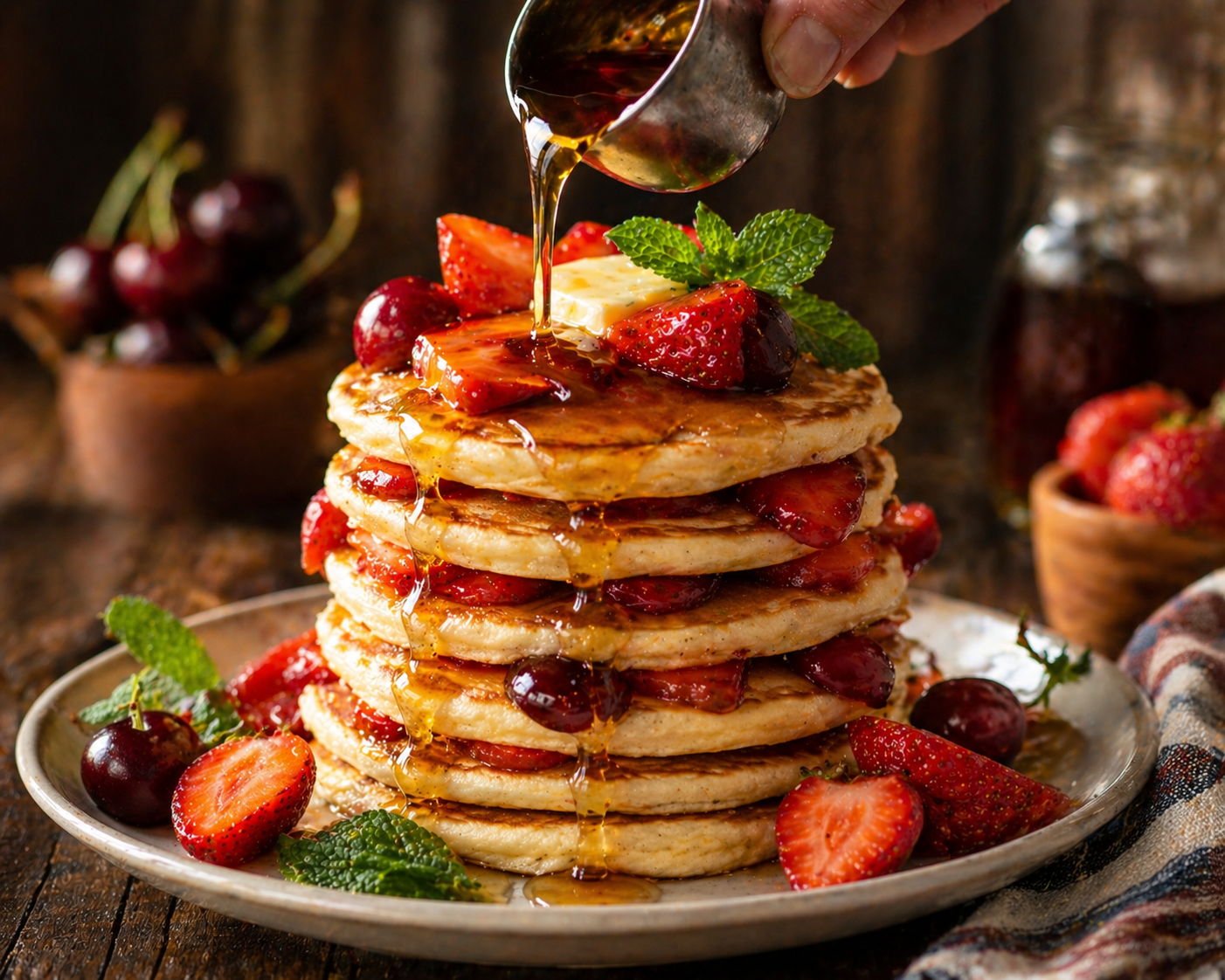
I remember waking up to a kitchen filled with the warm, sweet aroma of cinnamon and vanilla—the scent of my abuela’s special hotcakes. These aren’t your everyday pancakes: they’re hotcakes mexicanos, a Sunday-morning tradition in Mexico. Hotcakes were introduced from the U.S. in the early 20th century, but Mexico quickly made them its own. Instead of maple syrup, we slather them in cajeta, a gooey goat-milk caramel from Celaya, Guanajuato. Growing up, my family piled our plates high on lazy Sunday brunches – fluffy pancakes stacked like a tower, dripping with golden cajeta and topped with ripe bananas or plantains and crunchy walnuts.
Over the years I’ve learned that these sweet hotcakes are deeply rooted in Mexican culture. In fact, you can find fondas and breakfast spots all over Mexico where hotcakes are the star of the menu. The plantains (or very ripe bananas) we fry alongside them add a tropical twist and sturdy texture that perfectly complement the pillowy cakes. When I travel to the Bajío region, I always buy extra jars of cajeta to bring home. Celaya’s cajeta is legendary – it’s goat’s milk cooked slowly with sugar until it becomes a rich, dark caramel. That deep, vanilla-caramel aroma swirling through the air reminds me of cozy mornings with family. For me, making hotcakes still feels like wrapping myself in a delicious memory: a warm kitchen, friendly chatter, and the irresistible scent of sweet batter on the griddle.
Why This Recipe Works
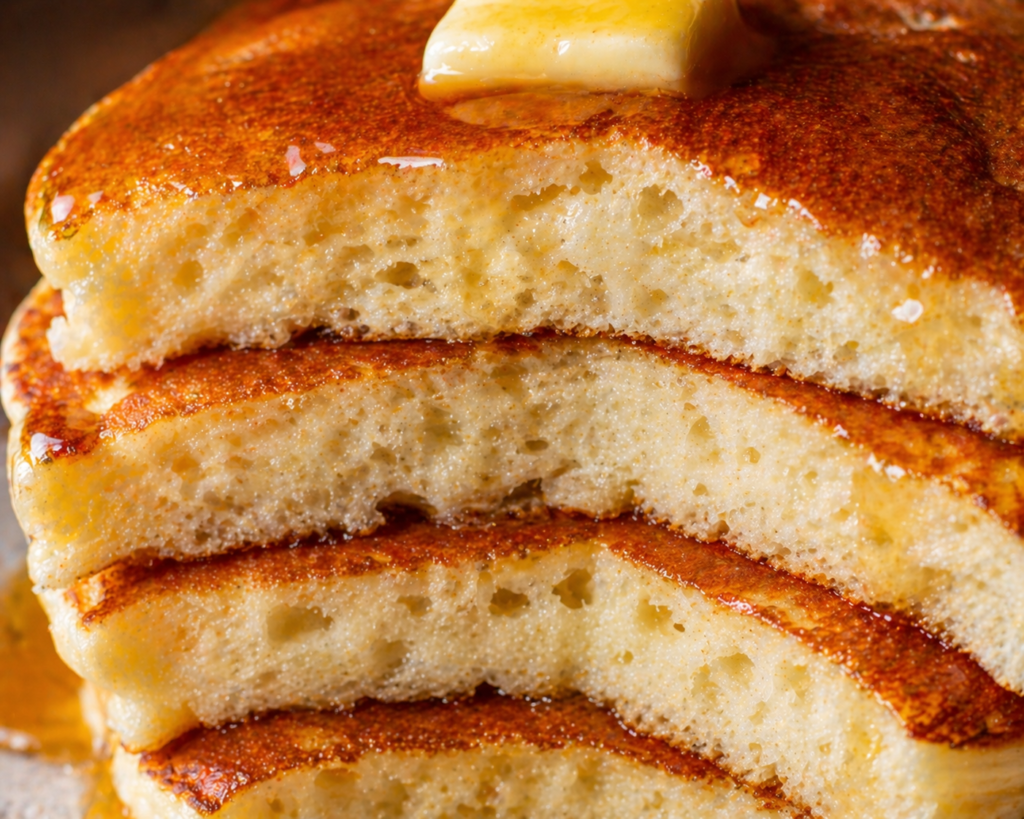
I love these hotcakes because they always turn out tall and fluffy. A little pancake science explains why: when baking powder meets liquid in the batter, it releases carbon dioxide bubbles that get trapped and expand under the heat. Those bubbles turn into the air pockets inside each cake. That means gentle mixing is the secret: I stir the batter just until the flour is moistened (a few lumps are okay!), so I don’t develop too much gluten. As Recetas Mexas notes, over-mixing leads to chewy rubbery cakes – we want tender and springy. The sugar and fat in the recipe also help. Sugar competes for moisture and slows gluten formation, while melted butter (and a little milk fat) shortens gluten strands, yielding a softer crumb. In short, the combination of baking powder, a bit of sugar, and rich butter makes these hotcakes light and golden-brown, not heavy or dense. When it’s all mixed correctly, the griddle sizzles and within a couple of minutes you’ll see tiny holes form – that’s when you know they’re about ready to flip!.
Ingredients
- 2 cups all-purpose flour – provides structure for fluffy cakes (sift if lumpy).
- 2 tbsp granulated sugar – sweetness and tenderizing (it slows gluten, helping soft texture).
- 2 tsp baking powder – double-acting leavening that creates lift and air pockets.
- ¼ tsp salt – balances sweetness and enhances flavor.
- 2 large eggs – room temperature, beaten lightly to incorporate air.
- 1½ cups whole milk – adds moisture and fat for richness (makes batter smooth).
- 2 tbsp unsalted butter, melted – for a buttery flavor and crisp edges (also tenderizes the cake).
- 1 tsp vanilla extract – (optional) adds warm, sweet aroma that complements the cajeta.
- Cajeta (goat’s milk caramel) – Mexican caramel made from goat’s milk, to warm and drizzle on top.
- Toppings: ripe banana or fried plantain slices, chopped walnuts or pecans, and fresh berries or a dusting of cinnamon.
The Method
I always start by heating my griddle or nonstick skillet over medium-low and greasing it lightly with butter. In a bowl I whisk the dry ingredients (flour, baking powder, sugar, salt) and in another bowl I beat the eggs with milk and melted butter. I pour the wet into the dry and stir just until a few flour streaks disappear. (Watch out: a few small lumps are fine – over-mixing will make the cakes tough.) The batter should be pourable but not too thin.
When the pan is hot and smells of butter, I ladle about ½ cup batter per pancake. I let them cook without flipping until I see bubbles dotting the surface and the edges look set (usually 2–3 minutes). Then it’s time to flip! It helps if the spatula slides easily under the cake – a light touch keeps them round and lofty. I cook the second side for another minute or two until it’s golden. Watch out for high heat: too hot and the outside will burn before the centers cook.
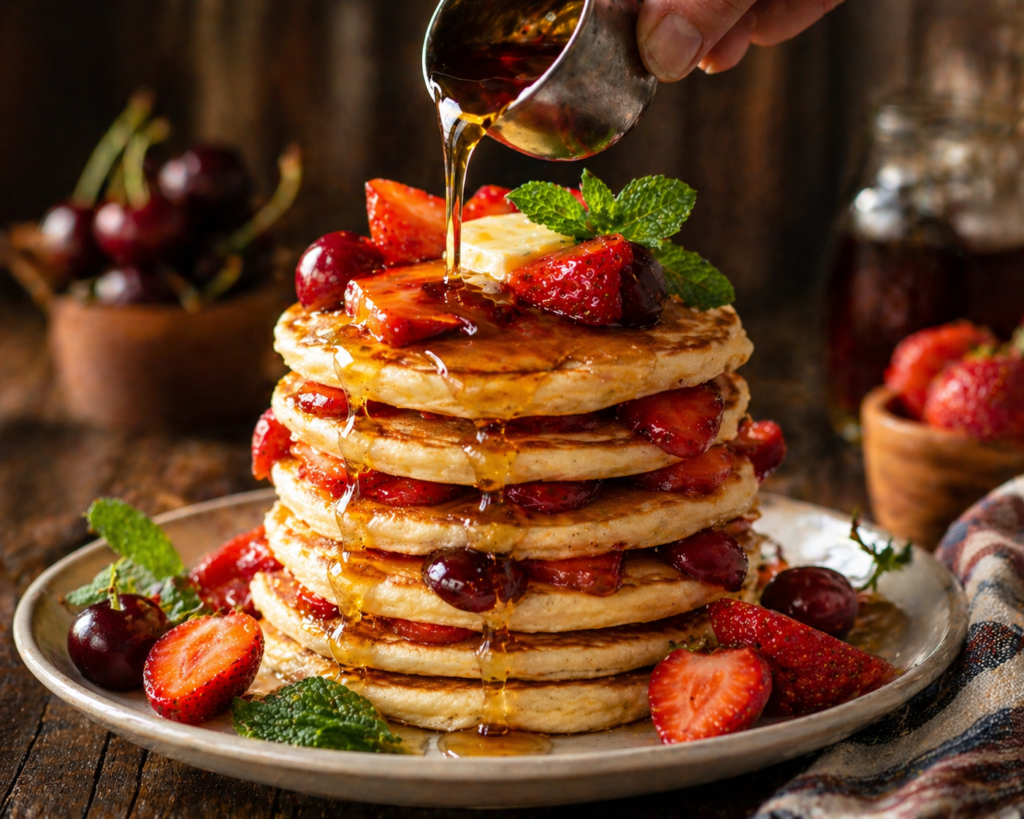
Once all the hotcakes are done, I stack them straight onto a warm plate. While they’re hot, I drizzle warmed cajeta over the top (it’s easiest if you microwave the jar for 15–30 seconds so it pours like syrup). I scatter chopped walnuts and fried plantain (or banana) on the pile. The contrast of textures and flavors is incredible – soft, rich cakes against caramel sweetness and crunchy nuts.
The Flavor Profile
These hotcakes should taste sweet and buttery, with a hint of vanilla and caramel. Each bite is tender and airy inside, with a slightly crisp golden crust from the buttered pan. The dominant flavor is the warm, burnt-sugar tang of cajeta drizzled all over – it’s like dulce de leche but deeper because it’s made from goat’s milk. When you slice into the stack, the steam and aroma of toasted goat milk and vanilla fill the air. The fried plantains or bananas add a caramelized fruit note, and the walnuts bring a nutty crunch that balances the sweetness. All together, it’s a harmony of fluffy, sweet, caramel, and slightly toasty tastes – truly a decadent but comforting mouthful.
Variations & Storage
Hotcakes are easy to make your own. You could stir in a pinch of ground cinnamon or nutmeg into the batter, or add a spoonful of cocoa powder for chocolate pancakes. Using buttermilk instead of regular milk gives a slight tang and extra tenderness. For a gluten-free twist, try a cup of oat flour mixed with a little rice flour (note: texture will be denser). My family also loves adding mashed banana right into the batter for banana-cinnamon hotcakes.
If you’re out of cajeta, use maple syrup or dulce de leche as a substitute. You can top them with whipped cream and fresh berries, or savory items like bacon or chorizo on the side for contrast. Leftover pancakes keep well: stack any extras between parchment paper and refrigerate in an airtight container for up to 2 days. Reheat them gently in a hot skillet or even the toaster until warmed through (or microwave for a few seconds) – they’ll taste nearly as good as fresh.
Final Note
Making Mexican hotcakes always feels like sharing a little bit of joy and sunshine. Every time I see the batter turn to golden rounds on the griddle, I remember laughter-filled breakfasts with loved ones. I hope these cajeta-drizzled hotcakes bring the same warmth to your kitchen — whether you’re feeding family or simply treating yourself on a slow morning. Enjoy, buen provecho and happy cooking!
Sources: Mexican hotcakes and cajeta history; pancake chemistry and fluffy tips.